Detailed Planning
Three-dimensional or computer-assisted planning can help the surgical team assess the joint and plan the procedure before surgery.
Robotic Joint Replacement in Bengaluru
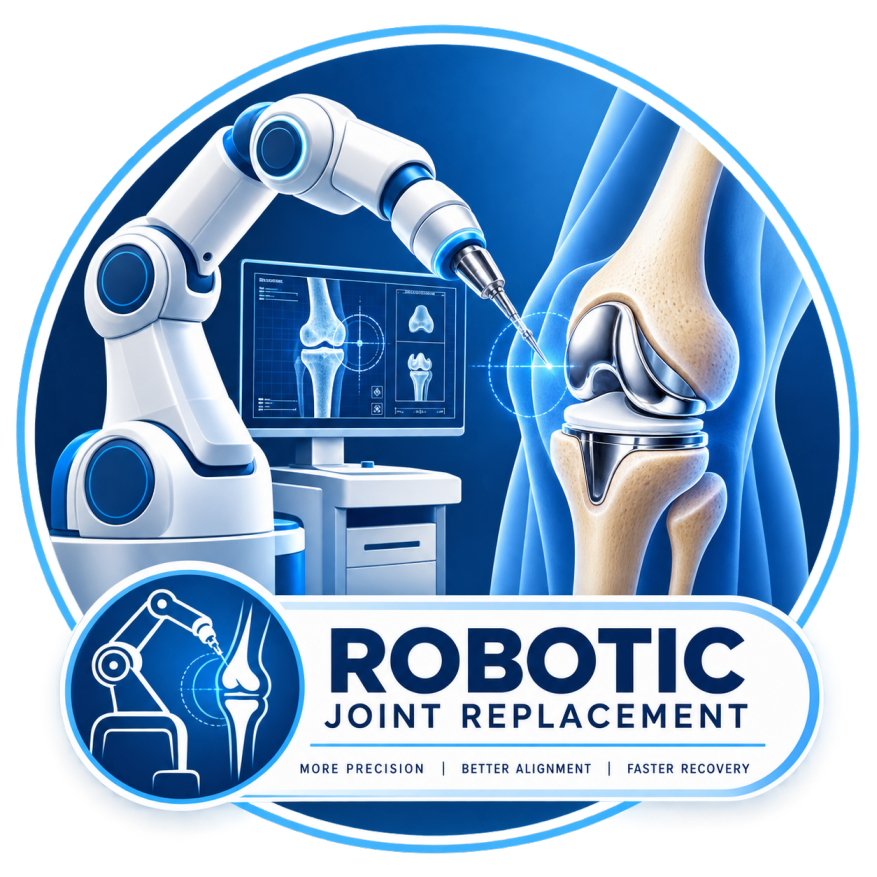
Robotic-assisted joint replacement combines detailed pre-operative planning with technology that can help the surgical team execute the planned procedure with greater precision. Treatment remains personalized to each patient's joint, anatomy, symptoms and goals.
Quick Answer
The technology does not replace the surgeon. Instead, it can provide computer-assisted planning and guidance during the procedure. The surgeon uses this information together with clinical judgement to perform the appropriate joint replacement.
Understanding the Technology
Robotic assistance is designed to support the surgical team rather than replace clinical decision-making. The potential role depends on the joint, diagnosis, implant system and individual patient factors.
Three-dimensional or computer-assisted planning can help the surgical team assess the joint and plan the procedure before surgery.
Robotic-assisted systems can provide guidance during selected steps of joint replacement surgery.
The technology can assist with planned bone preparation and implant positioning according to the surgical plan.
Treatment planning can take the patient's anatomy and clinical findings into consideration rather than relying on a one-size-fits-all approach.
The orthopaedic surgeon remains responsible for decisions and controls the surgical procedure throughout treatment.
After surgery, rehabilitation is planned according to the procedure, the patient's progress and functional goals.
Who May Be Considered
Robotic-assisted replacement is not automatically the best choice for every patient. It may be discussed when joint replacement itself is appropriate and the available technology is suitable for the patient's condition.
Joint Replacement
Robotic-assisted technology is most commonly discussed in relation to joint replacement procedures such as knee replacement. Depending on the technology available and the patient's diagnosis, robotic assistance may also be used for selected hip replacement procedures.
Surgical Journey
The exact workflow varies by joint, implant system and clinical situation. Your surgeon will explain the procedure selected for you.
Your symptoms, medical history, joint movement and imaging are reviewed.
Imaging and computer-assisted tools may be used to develop the surgical plan.
The surgeon performs the joint replacement with robotic-assisted guidance where appropriate.
Pain management, mobility and early rehabilitation are started according to the surgical plan.
Strength, movement and functional activities are progressed with follow-up guidance.
Potential Benefits
Robotic assistance is intended to improve the planning and execution of selected joint replacement procedures. The actual outcome depends on many factors, including the patient's health, diagnosis, implant, surgical technique and rehabilitation.
Important to Know
Robotic assistance is a surgical technology, not a guarantee of a particular outcome. Joint replacement still carries potential risks such as infection, blood clots, stiffness, bleeding, nerve or blood-vessel injury, implant problems and the possibility of persistent symptoms or further surgery.
Your surgeon will assess whether robotic-assisted surgery is appropriate and discuss the expected benefits, limitations, alternatives and individual risks before treatment.
Recovery & Rehabilitation
Robotic assistance does not eliminate the need for rehabilitation. Recovery is influenced by the type of joint replacement, overall health, mobility before surgery and adherence to the rehabilitation plan.
Movement and walking are introduced according to the surgeon's and rehabilitation team's instructions.
Medication and other measures may be used as advised to manage discomfort during the early recovery period.
Exercises focus on restoring joint movement, muscle strength, balance and functional independence.
Activities are gradually increased as strength, mobility and confidence improve.
Scheduled reviews help assess wound healing, movement, function and recovery progress.
Your orthopaedic team can guide you on activity, exercise and ongoing joint health after recovery.
Frequently Asked Questions
Get a specialist assessment and understand which joint replacement option may be appropriate for you.